that we do to be more environmentally friendly. We recycle more, try to cut out on plastic bag use, and switch to
light bulbs. We are far from perfect, but the more we learn the more we try to improve. This is all we can ask for.
As we are raising our children we are teaching them about nature, pollution, and to be environmentally friendly. Not only do we need to teach our children about caring for our planet, we need to start taking care of it now for them, this is the world we are leaving behind for them, their great inheritance, and they are the ones who are going to grow to care for it
If you haven't heard of this book Hoot, then where have you been? It's been out since 2002, turned into a movie, and has won quite a few awards.
The Details:
Hoot by Carl Hiaasen
Ages: 10 and up
Honors and Awards:
A Newbery Honor Book
The SEBA Book Award for Best Children's Book
An ABC Children's Booksellers Choice
An ALA Notable Book
A YALSA Best Book for Young Adults
A
Child Magazine 50 Best Children's Books Selection
A New York Public Library 100 Titles for Reading and Sharing Selection
A New York Public Library Book for the Teen Age
A Book Sense Book of the Year Finalist
A Bank Street College of Education Best Book of the Year
A New York Times Bestseller
A Book Sense Bestseller
Hoot has been sitting for quite a few years waiting until my oldest would sit and listen to it. I couldn't wait to read it to her. She finally asked for Hoot at bedtime a month or so ago and I started reading it on chapter a night until Saturday come around and I got the
Audiobook
so we could listen to it together while we painted rocks. She got mad at me anytime I paused the book to leave the room or talk to her.
We were both caught up in this story about a boy who was new to Florida, a mystery boy who handled wild animals, and a new construction site who is threatening the homes and lives of ground owls. The book was fast paced, adventurous, and witty.
The lessons in the book, about standing up for something you believe in, and how to do it (the right way) and get the results you want were well put and great for all kids to understand. My daughter went right to the library and checked out bird guides and looked up
Ground Owls and where you see them and thought they were so cute.
After we finished the book we watched the movie and I smiled every time she picked out when something was different.
This started our conversation on pollution and habitats. We have since then been looking into ways we can help our wildlife. Carl Hiaasen has written other books about the endangered wildlife in Florida and you can tell how passionate he is about caring for his state and the native animals who live there. If your teen loves animals I'd suggest his book
Scat (which we started but my 9 year old soon lost interest in it, I think in a few more years she will like it more as it takes place in high school)
While Hoot was a great book to read with my 9 year old, it didn't hold the attention of my 5 year old daughter. There aren't any pictures, and it's a long chapter book not written for preschoolers, so I sought out some books for her that would help explain why we need to recycle, and what we can do to take care of our world.
I came across Charles Ghigna. He has written a few books to help young children learn and do their part to be environmentally responsible.
Pick up the Park, We Need Water and Recycling is Fun are all a part of Charles Ghigna's environment books. They are super easy to read which makes them not only great for very young children but also for those who are just starting to read on their own. He another book in his "My Little Planet" books is Little Seeds. This is the only one I haven't read but if it's like the others I'm sure it's great as well.
Pick up the Park:


What child doesn't enjoy the park? Mine ask me all the time to go to our local parks and we spend a great deal of time on the playground and walking around. This book is one to read before you set off to the park, as it mentions all the things children like to do while there, and also ways they can help keep their park clean.
We Need Water:


Well duh! That's just a common sense statement, but this book goes tells about where we see water, how we use it, and how every living thing needs water. It's a stepping stone book to start you into talking about water. It doesn't go into depth on anything but is a great intro book for any water topic so from here you can talk about the river, the lake, the water cycle, water conservation, and so much more.
Recycling is Fun:


Not only does this easy reader talk about recycling paper, plastic, and tin but Ghigna goes into reusing as well. Donate old thing, and take torn clothes and make something new out of them. This book more than the other two goes into more depth about recycling.
 |
| we reused an old T-shirt and cardboard box to make a cat home. Idea credit to Pintrerst |
After reading this book and pointing out the recycling symbol it was fun to look at each thing we use and find the triangle on it this is one very simple way to get your children involved in recycling.
All of these books were illustrated by Ag. Jatkowska and are full page full of colorful and engaging images. Also I believe these books were made with recycled paper which is a great way to put forth action into what is being taught in all of these books.
As I mentioned Charles Ghigna has written these books as great introduction books about being environmentally conscious, but it's up to us as parents to really open the conversation and action to our children more.
Trees, please don't forget we need trees! Which just so happens to be another book I found that talks about trees. We all know how important trees are to our suvival. If you haven't seen the image below of the the last human/post human trying to breath from the last tree on Earth, then take a minute to look at it, read it and let it send that chill to your bones. It's common sense that trees, water, and nature are vital to our well being.
We Need Trees! Caring for our Planet


written by Vita Jimenez
Illustrations by George Ermos
Music by Erik Koskinen
This picture song book talks about all the reasons we need trees. It includes a CD that has the song on it, which is a folk tune. This book just covers all the ways trees are important: shelter, air, food, and mentions briefly how we should care for our trees. As it was written as a song there is a lot of repetition, and rhyming.
While this book talks about how important trees are, I found the book to be lacking in emotion. This is my own personal feeling. But to sing it as a song and pair it with a more heartwarming, emotionally connected book it would go very nicely.
I love that the book has the song on CD so you can listen to the song and follow the words and look at the colorful illustrations that show more of the story. They have a class hiking through the woods and looking at trees.
It's a great book to add to a lesson or Arbor Day celebration.
So we have a couple introduction books to get our kids interested in caring for our planet. These books just barely scratch the surface of talking and teach our children how to do Earth Day every day. I think that these are books and lessons that we need to use year round, not only for one week in April. As I'm searching out more books on each of these topics I hope to put together a lesson plan on each of the different topics (recycling, water, trees, pollution, and wildlife) once I have them ready with books that dive deep into each area I will be sharing them with you all so please keep your eyes open. Until that time let me share with you some links, along with some things my family has changed or will soon be changing as we have just learned more....
Green News is hoping that 2018 will call for an end to single use plastic
Sign a
petition calling for a ban on single use plastic (I did)

OK I get it we live in a fast paced world and convenience is everything! But what if we could have convenience and be more environmentally friendly? A couple easy ways we have done this in my house is reusable water bottles, and coffee mugs. Do you know how much plastic waste we can save just by switching to a reusable water bottle? Here are two different sites for you:
mightynest.com tells how the average american uses over 160 plastic bottles each year
Power Up shares how you can save around (or more) than $2,900 a year by switching to a reusable bottle, and even more if you switch to a reusable coffee tumbler and make your own coffee at home.
The bonus to having your own tumbler? Many coffee shops offer a discount if you bring in your own coffee container!
While we are talking about coffee, my husband and I recently switched back to the large coffee pot. It took us years to jump on the
K-cup
bandwagon. Once we finally did we thought this was so much better because we wouldn't be "wasting" a whole pot of coffee if we only drank 3 cups. Umm yeah there's this image that pretty much sums that idea up:
More than just the waste that the k-cups made our first "new" coffee maker broke within a year. We switched back to the "old fashioned" coffee pot and our waste has been reduced so much, oh and we are no longer needed a new box of coffee each week. We skipped the paper filters and went for a reusable filter that cleans easily, and did you know that your
coffee grounds can help in your garden?
Plastic bags. This bothered me when I was driving down the road and saw a bunch of plastic bags caught up in our trees and all I could think about was how awful it looked and the birds and other animals that are in danger due to these. Each year I try to cut down on our plastic bag usage, but had been falling short. This year I'm happy to say that we are doing much better. How? We have all seen these large tote bags:

Let me tell you I love them. I use one for books from the library, I keep some in the house, and in my car. If I happen to forget them and find that I'm at a store I usually can find them for $1. If you haven't used these you will be pleasantly surprised at how many bags you will save. I figure each one (1) I use saves between 2-5 plastic bags because they are larger and stronger.
Now say you're like my husband who doesn't like how much space they take up and that they are bulky and he often forgets them. They have other more compact reusable bags. This one fits 10 bags and easily can clip onto your key-chain so you won't ever forget them!
I started this blog mentioning how we need to get our children active in making changes. These young children I hope will inspire you and your children that you can make a difference!
8 year old girl against single use plastic
7 year old boy runs his own recycling business
I'm going to share with you a video I've recently watched that has given me a whole new wish list of things that I want and even more ways we can make ONE change and make a better impact on our world. This video will share with you more eye opening stats about our waste.
5 things we should use to save the planet
Here are some of the products mentioned in the above video. I had a ton of fun searching for them all and found that there is a lot of varity for prices, colors, and all options so I went a little overboard in sharing what I have found with you but I hope that in all these options you will find one that you would like.
_
Please remember that NONE of us are perfect, we are all just trying the best we can, but the more we learn and the more we can put forth some small change and effort the better our world will be.
I hope that these books and links I've shared with you helps you to start some great conversations and making at least one change in your own home. Please stay tuned for follow up post where I will come up with a lesson plan that can be done around helping our planet thrive better!
Together we can make Earth Day Every Day!


 The title alone grabbed my attention. My husband is a great cook, and he loves spaghetti and pizza so I knew I was getting this book just based on the title, then when I saw the cover image it sealed the deal. A good dad is someone who is there all the time, a great dad is one that is there and is fun and silly. The cover art portrays that fun loving child-father relationship. The spaghetti pot of the head marching around having fun. This "fun" dad is through the whole book, which I think is why it's a favorite of ours. The dad is excited and happy to spend time with the child, and makes everything they do entertaining.


 that I will have to write up a review on. We are not limited in our skill, unless we set (or don't believe in) them ourselves. Why can't a boy be great at the piano and baseball? Why can't a girl be a wonderful dancer and musician? Why can't you be a coder, runner, and singer? Always be open to trying new things!

 or books or get a lesson or take a class on the piano. What songs are played for tango? What is tango? Learn to dance the tango!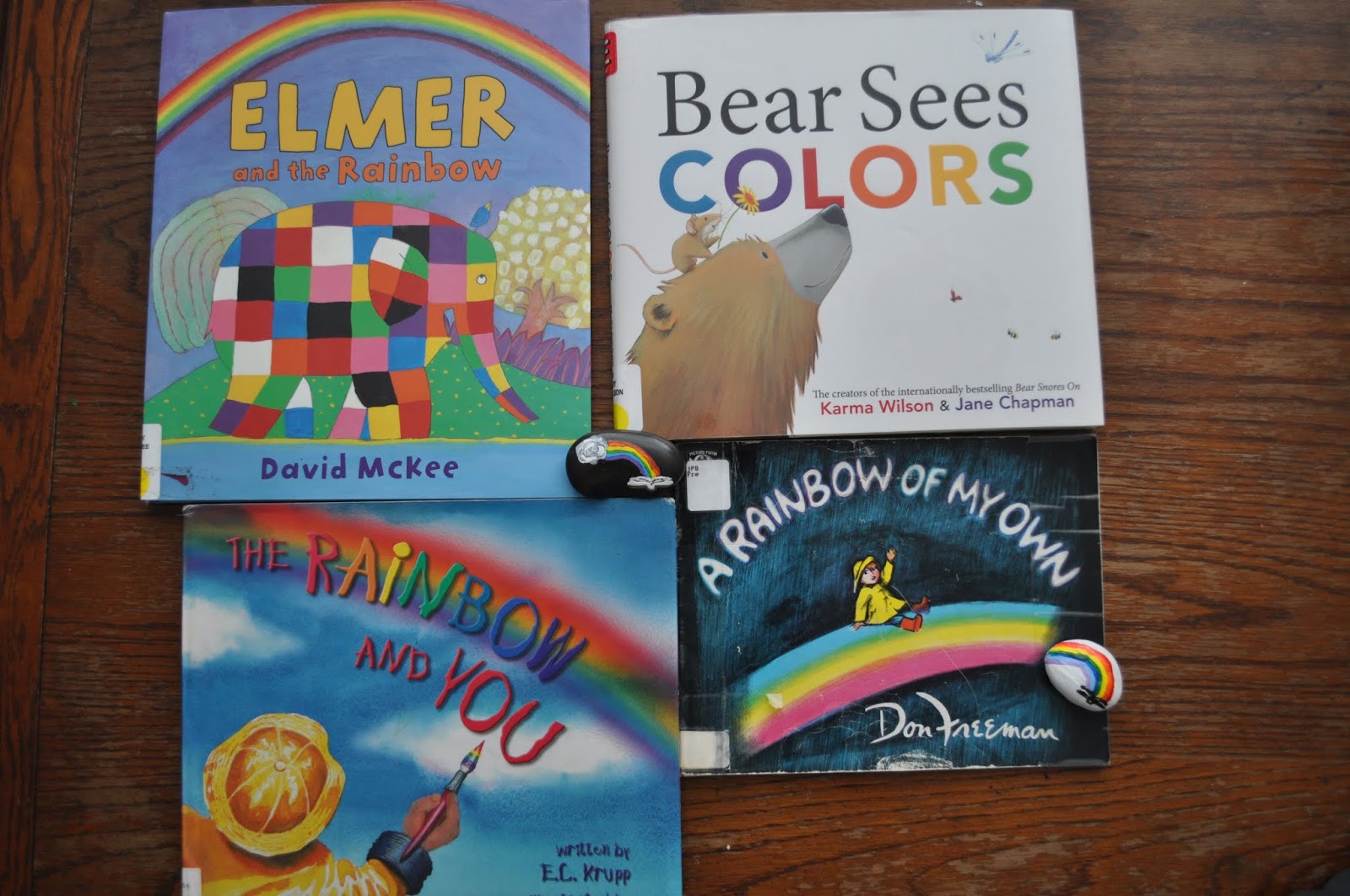
 ) and if your child already knows this patchwork elephant than this is a book to add to your rainbow lesson. It is another fiction book.
 Both of these books are great for helping children learn their colors. Penguins Love Colors has rainbows throughout the book and each little penguin has their own color, but the downside to this is that there are only 6 penguins instead of 7. This is quite common in many early learner rainbow books, they don't mention indigo so when the children are older and they are thrown for a surprise that there are really 7 colors. Don't let this keep your from using this great story because you can ask them what color is missing?


 assemble a rainbow from cloud to pot if you want to do this for St.Patty's day cut out some gold chips to add to it.


 light bulbs. We are far from perfect, but the more we learn the more we try to improve. This is all we can ask for.
 so we could listen to it together while we painted rocks. She got mad at me anytime I paused the book to leave the room or talk to her.
 What child doesn't enjoy the park? Mine ask me all the time to go to our local parks and we spend a great deal of time on the playground and walking around. This book is one to read before you set off to the park, as it mentions all the things children like to do while there, and also ways they can help keep their park clean.
 Well duh! That's just a common sense statement, but this book goes tells about where we see water, how we use it, and how every living thing needs water. It's a stepping stone book to start you into talking about water. It doesn't go into depth on anything but is a great intro book for any water topic so from here you can talk about the river, the lake, the water cycle, water conservation, and so much more.
 Not only does this easy reader talk about recycling paper, plastic, and tin but Ghigna goes into reusing as well. Donate old thing, and take torn clothes and make something new out of them. This book more than the other two goes into more depth about recycling.


 written by Vita Jimenez
 bandwagon. Once we finally did we thought this was so much better because we wouldn't be "wasting" a whole pot of coffee if we only drank 3 cups. Umm yeah there's this image that pretty much sums that idea up:


