Monday, March 26, 2018

Easter Books for Children

Easter is this weekend!  If you're children are like mine you've probably been reading Easter books, coloring eggs, doing crafts with plastic eggs, preparing Easter baskets, and going to local egg hunts.  Busy, busy! I wanted to share some of the books we love, and a couple craft ideas.


My childhood Easter book:  The Story of the Easter Bunnyby Katie Campbell
Published 1993 by Unicorn Publishing House

This was a book I got for Easter when I was in pre-school.  Somehow it has been very well taken care of and I now read it each year to my own children.   I love this book.  It does start off with a lot of words and might not keep young children's attention like shorter books, but it does have a nice pose to it to be read aloud.

Katie Campbell tell a story of the Easter bunny who use to be very small, as he grew he was picked on and went through struggles, until one day a child found him very weak and nursed him.  When he was better he wanted to thank the child so he made a basket, and painted eggs and left them for her, and he returned to his home where the other bunnies picked on him and he was a beautiful grown bunny.  The Story of the Easter Bunny is like and Easter version of The Ugly Duckling.
While the story is sad, the bunny runs away from home and has a hard time, it does end sweet with him growing into a beautiful bunny that gives gifts.

My favorite part of the book are the beautiful full page illustrations done by Mary Hildebrandt.  The illustrations are full of color and completely pull children into the story.  I love how the text isn't superimposed over the illustrations.  These attention grabbing illustrations are full of emotion, and tell the story all on their own, which with early readers is so important that they can look at the image and tell the story on their own before knowing how to read.  The emotions in the art also help children identify how the bunny is feeling, and can teach empathy.  "Look at the bunny here.  How do you think he feels?  How would you feel?  What could make him feel better?  What do you think of this?"

Craft Idea:  Aside from painting eggs with your kids have them paint kindness rocks and hide them to brighten someone's day.

I love painting rocks with my children, you can add words of inspiration or a message of kindness to them as well for others to find.

If you're having trouble coming up with some egg stuffing ideas you can add rocks to plastic eggs as well painting some for your children to keep or leave them unpainted for your little artist to paint.

I know for years The Tale of Peter Rabbit by Beatrix Potter use to be a popular books for Easter, it's what many of us grew up reading and hearing around this time of year.  The story of Peter Rabbit tho isn't about Easter, or eggs.  The book is great for any time of the year.  We all know this book, Peter is a naughty rabbit who goes into Mr. McGregor's garden after his mama told him not to, and he find himself in some danger of the farmer, and the cat, and getting lost.  He of course gets home safe and his mom takes care of him, and puts him to bed while his siblings have a nice supper.

Grace Maccarone has taken The Tale of Peter Rabbit and continued it into an Easter story in her book Peter Rabbit's Happy Easter.
Published 2006 by Scholastic

I love how this book picks up right where the Tale of Peter Rabbit leaves off, it starts with Peter waking up the next morning feeling bad for not listening to his mama.  This makes the book both able to be read on it's own or part of a story time where it can follow the original story Beatrix Potter wrote.

The story is fun and engaging, while the writing is simple to keep the attention of young readers.  The story is super cute with how the eggs were collected, an accident paints them, then how they were hidden.  I love that this story comes out and says "you should not take what isn't yours."  This lesson is very important for children.

The illustrations in this more recent story stay very close to those we grew up with in the original story.  This is because David McPhail did the illustrations for both books.  They are colorful, and detailed and tell the story.  They engage the children and keep their attention.  I love that in the second book there is more humor in the illustrations and made the children (my children) laugh and talk about what was happening.


Craft Idea:  To go along with using eggs collected from chicken, save your egg shells (wash them out) and fill them with paint and use the eggs to paint with.  A couple years ago I tried it out with my children.  The Easter bunny left paint and canvas for each girl and I saved egg shells and they had fun throwing the eggs full of paint at the canvas.


My youngest has always love Lift-the-Flap books and she has come across two books that she loves and we have read over and over:

Dora's Rainbow Egg Hunt
I love books that have children's favorite TV show character's in them.  I think they draw young children to them and make them want to read their book.  Dora has long been a favorite in our house.
Dora's Rainbow Egg Hunt goes through the colors of the rainbow (leaving out indigo) as they collect Easter Eggs of each color. As with all Dora books children get an introduction to Spanish.  Each flap they lift has something of the color under it "A yellow snake. Una culebra amarilla." The child keeps lifting flaps until they find the hidden egg "The blue egg. El huevo azul." The sturdy board book pages are great for wear and tear, and this book is shorter than most of the Dora stories we have read which is nice for children who have short attention spans.  The only down side to this book besides not including all seven color of the rainbow is that many of the flaps are tiny so the text on those tiny flaps is even smaller!

Craft Idea: To go off the colors they children learn with Dora take plastic eggs and have the child name the color and help you glue them together and make a Easter Egg door wreath.

If you don't have plastic eggs or want to do something different you can also cut out egg shapes and have the child color them in and glue them together to form a wreath.


The Easter Bunny left us what is my favorite lift-the-flap Easter book two or three years ago:
  Peter Cottontail's Easter Surprise
Written by: Joseph R. Ritchie
Illustrated by: Lydia Halverson
Published by CandyCane Press copywrite 2006

This is another sturdy board book and unlike Dora the flaps you lift up are large and thicker.  These differences has made the book I found at a thrift store last the past two or three years with much use and still is in great shape.

In this Easter Surprise book we are finding what Peter has left for each animal, so it's a different take than the other books I've listed here. 

As we meet each animal, we are told about them and get to guess what is in their egg.  The short pose is easy to read and rhymes. I love that there are new words introduced.  Instead of keeping the wording super simple like many board books do there are more colorful words to increase vocabulary.  "Happy Jack is on the prowl," not just hunting.  Each page reads like a fun adventure poem.  I've read this book at least 7 times this past week and it's still fun to read out loud.  I also want to mention how creative the gifts are that are inside the eggs.  Coconut covered cheese balls for the mouse.

Lydia Halverson has done a great job with the illustrations, so the child's attention stays on the page and helps them follow along with the story.  The little image of Peter Cottontail looking out of the text box to spy on the animal finding his gift is a cute touch.  Colorful and engaging. This book is one your little one will love for years to come.


I hope you all have a very HAPPY EASTER!


Saturday, March 17, 2018

Benny's Pennies: so many lessons in one book

I came upon Benny's Pennies when I was looking for a book to read to my daughter's preschool, I wanted to talk to them about giving to others.  At first I was happy to have found a preschool level book that touched on that subject but as we read it and I shared the book more talking to others about what we were doing at the school I realized that this book had so many lessons that we could (and did) tie into it.
This post will be a bit longer than most of my others, I hope you don't mind.  I want to share not only the review of Benny's Pennies but also all the lessons we've used from that book at home at in the preschool so that you can use them in your own way.


Written by: Pat Brisson
Illustrated by Bob Barner
Copywrite: 1993
Published by Dragonfly Books

The illustrations you will notice right off aren't hand drawn, painting, or digital images that we are use to in many children's picture books.  There is a really need note in the begining of the book about how Bob Barner created the art used.  I found this note and different style to be fasinating and it would make a fun craft to do with children of any age.  The note said that he used torn and cut papers from five different countries, pastels, colored pencils, glues, and paints to create each picture.  They also tell that the typography was done by Lynn Braswell.

The illustrations is Lesson 1: ART! Get out that box of scraps and whatever you have laying around.  Have the children make their own picture.  Or if you want to have more structure there are some amazing ideas on Pinterest!  For older kids you might want something really detailed (like this flower).  For preschoolers you can have them write their names with torn paper.

The story of Benny's Pennies is really sweet.  Benny has five pennies and he goes out and buys something with each penny.  As Benny is walking the story tells of what he buys and how many pennies he has left. Throughout the story there are small rhymes "Mr Hopper said 'You're quite the shopper." Once Benny has no more pennies left and his arms are full he goes back home.  Who are all the items for?  He spent all his money on things for his family.  He didn't get anything for himself!

I love that!  I love the teaching of selflessness, and giving to others.  Those pennies were his, he could have gotten himself cookies, candy, and whatever, but he got everyone else something instead.  At the end I asked the group I read to how they thought Benny felt.  Have you ever given something to someone before?  If they can't think of a time you can say maybe for someone's birthday, they give gifts and don't get any in return.  How does it make you feel to give a gift?

My youngest daughter's school has a really neat system set up that there are jars in each classroom for children and parents to put their spare pennies, these are then counted, but in a bank account, and saved for when needed.  This money is then used to help families in the school who might have something major happen.  Some examples, a family loses their house to fire, a child is sick and needs to stay at a hospital far away and insurance doesn't cover the family's stay there, a loss of a parent or child.  These are very hard times for a family to go through.  These are things we never think will happen to us but unfortunately they do.  A group of parents from the school is then gathered and they vote on how much of the money to give to the family in need.  This is such a blessing to have set up, for the times that it's needed.   I love that the school has something like that set up to help out their own families.

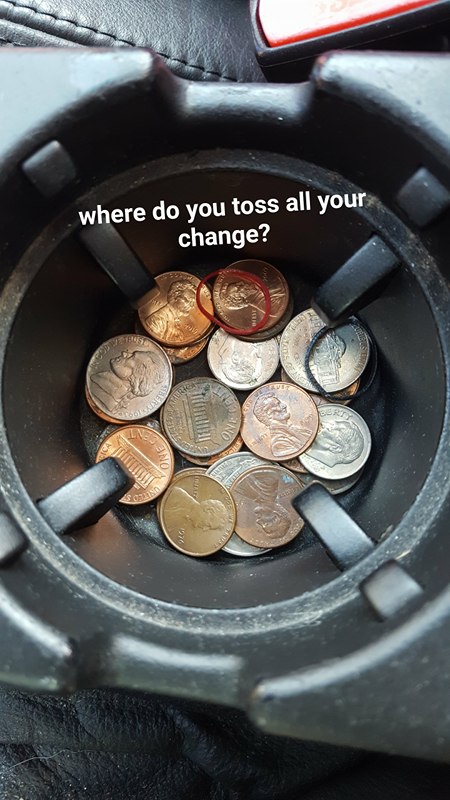
I read Benny's Pennies to the class to introduce them to their own way to give to others.  A couple kids started to call the jar of pennies "Benny's Pennies" while others just said they were bringing in pennies to help sick kids.  It was really sweet to watch them and see how empathetic they were about this money is going to help someone one day.  I loved watching my daughter dig through our cup holders, and constantly stop to pick up a penny to put in her classroom's jar.

At home we have taken this idea of charity and applied it to nickles.  So as we come across nickles they go in a small pickle jar, when that is full we will take it to donate to a charity.  We are doing a smaller jar because it will fill up faster for one, and we can give to more charities than just one.  Since my oldest daughter is 9 now I plan to have her help research all our local non-profits, and charities, and learn more about each of them and ways to help them along with donating what we've saved.


"A small amount today will make a big difference tomorrow"

Lesson 2: Charity-The act of giving to others without getting anything in return.  That's the main lesson of the book and what we just talked about

Lesson 3: Math!  Benny starts out with 5 pennies, each time he buys something he has one less.  There are many counting stories like this; each one teaches children math.  You can take this a step farther and have pennies for them to play shopping with.  Set up a sheet of paper for them to count to 50 (this helps in you are rolling change)   If you are saving change you can make a number line and have them guess how many pennies (or nickles or whatever) you have.


Lesson 4: Price & Values.  The one thing about this book that bothered me and made me laugh a bit is that you cannot buy anything today for a penny!  I felt like the book was giving kids a false sense of money that you can't buy a cookie for a penny.  I do however know that it takes a long time for children to understand money and money values.  My youngest call all coins pennies, all bills are a dollar.  Therefore this everything is paid for with a penny is understandable.  You can turn this into a lesson on it's own.  Start pointing out the price of things the cookie you want with lunch is .50 that is 50 pennies, or 2 quarters.  It will take them a while to understand but it's a start.


From there you move on to Lesson 5: Savings!  for older preschool kids, Kindergarten and up, have them start saving their money to buy something they want.  How? Chores.  Look for chores that are suggest for their age.  We started this and it's been working well, if they don't do the chores they don't earn the money, it's pretty simple.  I made this chart for them and you will notice that they aren't earning $5 a day, most chores are between .10 to .25 each with the exception of bigger jobs.  Feeding the animals they don't earn on, that's part of being a pet owner.  (This is my opinion you can do as you wish in your house)  Now why am I giving them so little?  For one I can't afford to pay them $5 every day.  I am against allowances, you can can earn your money.  Two, we have a spare change jar, so it made sense, as soon as the dog is walked I can give them a dime, it's instant reward.  Also since they are young the chores are easier (and I usually have to reload the dishwasher, finish and re vacuum, ect) as they grow and doing dishes entail loading, running, and unloading the dishwasher along with washing items by hand they will earn more.  You can adjust this to how you feel is best.
I also saw this idea on pinterest that fits well for jars for the kids/family: save, spend, give.

Readability of Benny's Pennies.  I held the attention of the preschool I read to (ages 3-5) very well as I had they help calling out how many pennies and the book kept them engaged throughout it.  I'd say it's great for kids ages 4-8.  Pair it with other books focused around helping others and it would work well for any story time.


The Bottom Line: A Great Lesson Book
The Story Line: is easy to read, fast paced, fun, engaging, and has a beautiful lesson.
The Illustrations: are unique, colorful, and aid the story.

"To give and not expect return, that is what lies at the heart of LOVE"
-Oscar Wilde

Friday, March 9, 2018

Not A Box!

Everyone with or around kids know how fascinating cardboard boxes are for children.  Kids can play with a box for hours - sometimes the box is better than what came out of it! Antoinette Portis completely understands how a child's imagination works.

Have you seen Baby's First Christmas? If you haven't seen the video it's worth the 3 minutes, I laughed so hard, and the end with the box, it's every Christmas for the first 2 to 3 years!  Those first few Christmas with babies, toddlers, and preschoolers are the memories that Not a Box made me think of.  I love this book, I love everything about it, the illustrations, the concept, the simplicity of it all come together so well.

The Details:

Written and Illustrated by Antoinette Portis
Published by Harper Collins
Age Range (according to Amazon) 2-4years

Not a Box is a very easy read.  Each page spread has one sentence, the longest being six or seven words.  It's a great book for preschoolers and Kindergarten, to read aloud to little ones or to build confidence in those who are starting to read on their own.

The illustrations are so cute!  They are simple line drawings in black and red.  I think the simplicity of the bunny and the box is key to the next page where in red over the black outline from before is a new picture with more detail.  It shows what adults see compared to what a child is seeing.  I love it!  As you read "Why are you standing on a box?" before you turn the page have the children guess what the box could be.  Really spark their imagination.  Maybe he's standing on the box because he's the ring leader at the circus.  Maybe she is sitting in the box because she's the caption of a spaceship that's going to Mars.  Give them the chance to open their minds to all the possible things that box could be.

After finishing Not a Box I wanted to go and get a huge empty box for my girls to play in.  At Christmas time they do just that until the box no longer can stand up.  An empty box is just fine, but as the kids get older check out some of these cute ideas on things to make with boxes I've found on Pinterest that I love: box traina huge castlerocket ship or plane, there are so many ideas! From play sets to games to useful art easel.  Have cats?  How about making a cat tower?  Comment below what you've made and how it worked out.

Antoinette Portis also wrote a similarly named book Not a Stick.  This one I haven't read yet, my guess is that it's along the same lines of Not a Box, but kids running around with sticks makes me nervous that someone will get hurt.

There are also several other books about boxes that I now have to check out.  I think we might have to have a box party one day with all these great titles:


May your creativity and imagination be limitless! 

Saturday, February 24, 2018

A Springtime story "Lost in the Woods"

Spring isn't too far away. With the thought of melting snow and how soon we will see the grass turn bright green, the trees start to bud, and flowers making their appearance, I have been in the mood for some good springtime books!  I came across this one that the title caught me first Lost in the Woods What's it about? Does a kid get lost in the woods? Does it tell you what to do if you get lost? As all these questions about the title rolled through my head I knew I had to read it regardless of what it was about.  Picking it up I found that it's a Photographic Fantasy, with a fawn on the cover.  I was sold, this was the springtime book I wanted.

The Details:


 by Carl R. Sams II and Jean Stoick 
Published by Carl R. Sams II Photography, Inc.
Copywirte: 2004
Grade level: K-2
National and International Awards for Lost in the Woods:
2006-2007 Children's Crown Gallery Award Nominee
2005 Independent Publishers Best Children's Picture Book Award
2005 Earlychildhood NEWS Director's Choice Award
2005 Earlychildhood NEWS Judge's Choice Award for Excellence
2005 USA Book News Best Children's Picture Book Award
2005 Library of Michigan "Michigan Reads!" Finalist
2004 Great Lakes Booksellers Association Book of the Year Finalist
2004 ForeWord Magazine Book of the Year Finalist


That is an impressive list of awards for any book, and it's easy to see why it received so many awards.  The photography is stunning and interactive.  The story goes perfectly with the subjects in the photographs, it's educational, and the story is fun to read aloud.
I will say I agree with the Kindergarten and older reading level.  My four year old and the other preschoolers I tried to read this book to were not interested.  They liked to look at the pictures but they lost interest quick in the story.

The story is about a fawn waking up in the woods alone, the other animals think he's lost, but he knows his mom will come back.  The fawn walks around the woods alone and meets other baby animals.  Finally at the end it's his time to join his mom and wander around.

Carl and Jean did a great job with putting a fictional narritive to the photographs they took and incorporating some nonfiction in as well.  Children learn about some different animals in the forest, what they do, and about the first two weeks of a fawn's life.

These two wild life photographers tell how they wrote this book to educate people that when they see a fawn alone in the woods they aren't abandoned, they spend most of the first two weeks of their life alone because the mother's sent will attract predators.  (This and more about the authors can be found on the inside back jacket cover of the book)   If you come across a baby deer laying in the grass alone you should leave it be, you can keep an eye on it, if you notice that it is injured, week, extremely thin or you want more info about finding fawns in the woods you can check out the National Wildlife Federation.  If you want to have a check list of questions to ask yourself you can find a detailed list here by Second Chance Wildlife Center.

There are many lessons parents, and teachers can use from this book.  I'd highly recommend it for anyone wanting to do a spring, baby animal, or nature lesson, identify animals, their sounds, where you find them, what they do, and so on.

I thought the book was easy to read. I'd say it's at a 1-3 grade could read most of it on their own with little help.  Reading it aloud I believe is the most fun and useful though so you can animate the sounds of the animals.  Example:
"Look how he used his spots.
He did. He did," said the Katydid
Then there's the little owl that was also another favorite of mine:
"Who-hoo-hoo do I see?"
hooted the little saw-whet owl.
"Someone's moving through my woods.
I saw-whet!
I saw-whet!"

There is a special treat at the end of the book, there's a page of did you spot these animals? And we spent time looking back through the book to find a little bunny, a caterpillar, and still haven't found the Tiger Swallowtail butterfly.  This was a lot of fun to do a look and find through each of the pages.  My youngest even noticed a shadow on the page about predators which I had read and searched twice before she pointed it out to me.  I think it's a great book you can read and find something new in with each read.

What did my daughters think of it?  My youngest lost interest in the book right from the start the first time we read the book for their review so only my oldest shared her thoughts on Lost in the Woods, you can view her video review here.  It wasn't until bedtime that my youngest would look through the book with me, and it's not one she will pick out to read together.

The Bottom Line: Perfect Spring Read
The story-line: is fun, easy to read, educational, and entertaining
The art: is colorful, extremely interactive, educational, and aids the story.


Saturday, February 17, 2018

I Love You More Than Rainbows

My kids love holidays...all occasions to celebrate anything.  So with Valentine's Day this week they read and reviewed I Love You More Than Rainbows by Susan E. Crites.  It's not necessarily a Valentine's Day book but it does talk about loving people more than objects and makes a great point.

Before I go into my review let me give you the details:

                                           Written by: Susan E. Crites
                                           Illustrated by Mark and Rosemary Jarman
                                           Published in Nashville, Tennessee by Tommy Nelson Jan 2008
                                           Copywrite: 2007
                                           Format: board book (link above), also available in hardcover

This is another great used book find that I picked up when my youngest daughter was 2 because it was a colorful board book and has been well read in our house.  On Amazon it says this book is for children aged 5-6 but again I want to argue with this.  I started reading this to my 2 year old daughter and it was immediately a favorite that she'd ask for over and over again.  We'd cuddle up on the couch and I'd read aloud how much I loved her.  It was such a sweet bonding time we had together.  I would say get it for your babies and enjoy it for many years, when they learn to read they can read it to you telling you they love you more than all their favorite things.

I love the message that Susan E. Crites sends to children in this book.  We can like and enjoy many experiences but we love each other more than that.  To take a couple quotes from her book:
"I love you more than a candy store filled with all your favorite treats."
That sends a very clear message to children.  No matter what there is in the world I love you more.
Crites did a wonderful job coming up with so many different things that people say we love, and showing that we love our kids and each other more.
"I love you more than the fun you have when you make lots of noise!"

The illustrations are wonderful throughout the whole book.  Each page transports the readers to a new place, new season, and new adventure that children enjoy doing.

This book can be used for any holiday that you talk about loving someone else, it would make a great lesson for libraries, preschool through first grade.  Valentine's day you can talk about friendship being more important than favorite food, toys, or activities and how we love our friends more and what we love to do with our friends.  It would also work for Mother's and Father's Day as well.  Here are some examples:


To make these they can be as simple as you need just using construction paper and writing the note, or to give more of a gift attach a favorite candy bar, or cookies in a jar to make together.  Use your imagination and create something special.


The lesson learned from this book is so valuable.  I reference the book all the time, when the kids are fighting over who ate the last (in today's case) mint, or used special markers or stickers.  These are big deals in our house.  I have to sit each child down and explain how the object that is gone is only a thing and can be replaced, the important thing is that they love each other more than anything, and that I love them even more.

The Bottom Line: A Valuable Lesson and Wonderful Book
The Illustrations: are fun, vibrant, attention grabbing, and aid the story
The Story Line: is easy, fun, and entertaining to read

Make sure you tell the ones you love how much you love them! 

Friday, February 9, 2018

Snow Day books

With snow in the forecast we all tune in and wait for the announcement of a Snow Day!  We love them in our house, as most children do.  We start making our plans for what we will do with a free day.  This week as we waited to hear if we'd get a 2hr delay or snow day we read three of our wintertime books and thought we'd share them.  We have The Snowy Day by Ezra Jack Keats, Snow Day by Patricia Lakin, and All You Need for a Snowman by Alice Schertle.  There are so many more great books about snow, snow days, sledding, snowmen and much more, but these are the couple my kids picked out to share and review this week.

Snow Day 
Written by Patricia Lakin
Illustrated by Scott Nash
Copyright 2002
First published by Scholastic: December 2004
I highly recommend this book for beginning readers. 0-7.  Yes, I know that's a large age gap there but I have good reasons for this.  While this is not a board book therefore won't survive rough baby handling it's no reason not to read it to infants and toddlers.  We know that all reading to infants helps their brain development.  Snow Day has big, simple words and will grow with babies and it also has colorful illustrations that they will enjoy looking at.  As the baby develops reading skills this will be a first book they will be able to read on their own.  Using large print, sight words, and rhyming it is a perfect book for Kindergarten.  

The story of these crocodiles getting dressed and ready to go outside then learning that they aren't kids but actually the principles is super cute and funny.  I think that is the part that makes this whole book great!  I love the whole concept of the book.  What do you need to wear outside? Where is the safe place to sled? Who is going to go sledding?  It gives you the perfect intro to talk about winter safety.

Scott Nash did a great job with the colorful images.  I'm going to guess that he came up with the idea of having crocodiles instead of people and I think he did a great job there.  You couldn't have someone convinced that it's a group of kids when it turns out to be adults if it was people or even most other animals.  In true picture book fashion the art tells the whole story so kids who can't read words yet can still read the book on their own.

Snow Day Bottom Line: If you have a child 7 or younger OR you teach preschool, Kindergarten, or First Grade you will love this book!

  • The Story-line: is cute, simple, easy to read, made for young children, and keeps their attention.
  • The Illustrations: are colorful, tell the story on their own, aid the text, are engaging, and cute.


The Snowy Day
Written (and illustrated) by Ezra Jack Keats
Copyright 1962
Awards: The Caldecott Medal

Another snowy day activity: Painted Rocks
This is a classic "What will we do in the snow" type book.  It's a sweet and engaging story about one little boy's adventure out in the snow.

I love how waking up in the morning to a fresh snowfall is so magical to children.  It's so pretty, peaceful, and full of possibilities!  I think this book captures that magic and possibility of a snow day well.  How much fun did we have growing up in fresh snow?  Making tracks, snowball fights, building snowmen, and sledding.  Both of my girls love the part where the boy brings in a snowball and it melts.

The text is more in depth than Snow Day which we just talked about, but it's not overwhelming for children.  This is a book we have been reading in our house since the toddler years.  Amazon says it's for preschool - Kindergarten.  As I said earlier it's never too early to read children's books to babies so pick up the book now for your little ones and I'd say even first graders would enjoy reading it back to you aloud.

The bright colors grab the children's attention and I believe that the simple not super detailed artwork allows the kids to use their imagination more.  What do the kids faces look like?  Are they smiling?  Where does this story take place?  The children can allow the story to be their own in their mind.

The Snowy Day Bottom Line:  Read this for your younger readers before your next snowfall!

  • The Story-line: is easy for children 2-7 to follow along with, is fun and full of ideas of fun to have on your kids next snow day.
  • The Illustrations: are colorful, imaginative, and help aide the story.

To watch what my daughters thought of both Snow Day and The Snowy Day you can watch their video here.  They each have their favorite out of the two books and go over what they like about each.

Finally we got a good wet snow to build our own snowman, and in honor of that we read All You Need for a Snowman by Alice Schertle.  The kids made another video of their review and show off the snowman we made , be sure to check it out and follow them on YouTube for more fun videos.

All You Need for a Snowman
Written by Alice Schertle
Illustrated by Barbara Lavallee
our snowman Feb2018
Copyright: 2002

This is a cute poetic book about building a snowman.   Again I will say that this picture book works for the same age group of toddlers up to first grade when children are reading well on their own.  The lines of text are short and not overwhelming.

I love the step by step of building the snowman.  "That's all you need..." and wait for the kids to say "No, you need this next" and then continue to read "Except..." It's a very cute idea and interactive.

You can use this book as a great platform for building your own snowman.  I can see a whole lesson plan for educators around "What all do you need?" What type of hat? What will you use for a mouth? It's great for using your imagination. If you come up short on supplies for building a snowman check out some of these helpful kits:


 Barbara Lavallee did a great job with the illustrations, they are colorful, and fun, and fully aid the story.  Again like Snow Day this is a book that kids can "read" to themselves without having to read the words.  My kids especially love the full two page spread of the finished snowman.  The snowman is larger than life and wonderful.  At the same time my adult mind keeps picking out that there either the kids are the size of aunts or that there's some magical element that once the item is on the snowman it grows to be ten times it's original size.  That is just me over thinking the images tho.

All You Need for a Snowman Bottom Line: Read this and go make your own Snowman!!
  • The Story Line: is easy to follow, flows smoothly, and is engaging and interactive for children.
  • The Illustrations: are colorful, well done, and aid the story line while keeping the kids attention.


For more info about reading to infants and babies please check out these links:
Babycenter: Reading to your baby
The Benefits of Reading to your Newborn
6 Great Reasons to Read Aloud to your Kids


Now there are millions of great snow day books out there!  This has only been 3 of the ones we love, I am sure we will share more in the future.
Comment Below with your favorite snow day book!!


The Biggest Love of All

Love. There are candy hearts  and teddy bears, cards and books  filling the shelves. TV commercials  and billboard signs, all...